


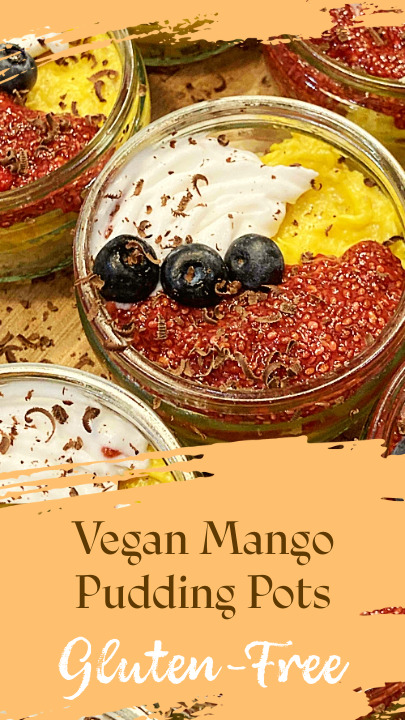
These stunning layered mango pudding pots are gluten-free, vegan, dairy-free, naturally sweetened and absolutely jam-packed with nourishment. Let’s dive in!
I invented these last week whilst on retreat, during a magical moment of inspiration. It was pure joy to see everyone light up when I brought them out after dinner. I can honestly say there was not a morsel left. The bowls were spotless!
These mango pudding pots make a beautifully creamy start to the day and are part of both my refined sugar free desserts and my plant-based breakfast ideas collections.
What You’ll Need
You’ll need some of those tiny pudding pots for these beauties. I used Gu pots, you know, those little round glass pudding pots that are about 4cm in diameter? The lovely thing about glass ones is that you can see right through them, which means you get to admire the colourful layers as you’re eating. Alternatively, ramekin dishes would work a treat too.
They’re super easy to make, but please note you do need to set a little bit of time aside for soaking. You’ll need to soak the dried mango and chia seeds to prepare them properly. I either do the soaking part when I’m making other food, or simply leave everything overnight. Whatever suits your schedule best.
What Makes This Mango Pudding So Delicious?
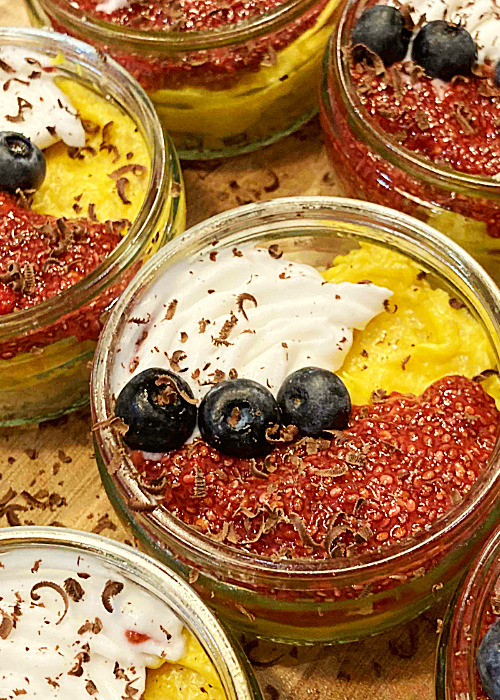
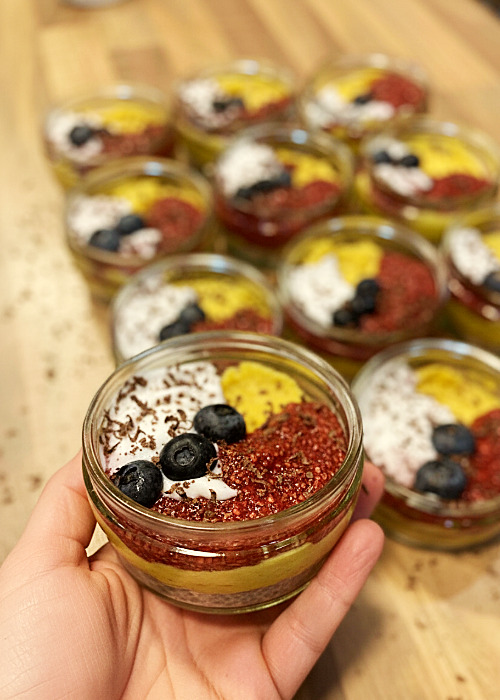
This pudding is entirely naturally sweetened, using fruit and the tiniest hint of maple syrup. I’m using dried mango, which delivers a rich, deep, sweet mango flavour that’s so much more concentrated than fresh. The layers create a beautiful contrast of textures, from the crunchy cashew base to the silky mango middle and the delightfully jammy chia top.
Choosing the Best Dried Mango
Not all dried mango is created equal, I’m afraid! Here’s what to look for when you’re shopping:
Go for unsulphured and unsweetened. You want dried mango with no added sugar or preservatives. The fruit itself is sweet enough, trust me. Check the ingredients list and it should just say “mango” and nothing else.
Look for organic when possible. Mangoes can be heavily sprayed with pesticides, so organic is a lovely choice if it’s available and fits your budget.
Colour matters. Good quality dried mango should have a rich golden-orange colour. If it’s too brown, it might be over-dried or old. If it’s unnaturally bright, it’s likely been treated with sulphur dioxide to preserve the colour.
My favourite place to find good quality dried mango is health food shops or the dried fruit section of larger supermarkets. I’ve had brilliant results with brands that specialize in natural dried fruits.
Variations and Substitutions
One of the lovely things about this recipe is how adaptable it is. Here are some variations I’ve tried or thought about:
Different Fruit Layers
Strawberry chia layer. Swap the raspberries for strawberries. You’ll get a sweeter, less tart flavour that’s absolutely gorgeous with the mango.
Blackberry or blueberry. Both work wonderfully and give you that beautiful deep purple colour. Blueberries are slightly sweeter, whilst blackberries have a lovely earthy note.
Mixed berry. Use a combination of whatever berries you have to hand. Frozen berries work just as well as fresh for the chia layer.
Mango Alternatives
Dried apricots. These create a gorgeous golden layer with a slightly tangy flavour. You might want to add a tiny squeeze of lemon juice to brighten it up.
Dried peaches. A bit more delicate than mango but absolutely delicious. The flavour is softer and more subtle.
Fresh mango. If you can’t find good dried mango, you can use fresh, but you’ll need to add a tablespoon or two of coconut cream to get the right consistency, and the flavour won’t be quite as concentrated.
Nut-Free Base
Sunflower seeds. Grind these up instead of cashews for a nut-free version. They create a slightly more rustic base but work brilliantly. You might need an extra tablespoon of maple syrup as they’re not quite as naturally sweet.
Oats. Use gluten-free oats if needed. Blend them with a couple of tablespoons of coconut oil and the maple syrup to create a lovely biscuit-like base.
Sweetener Swaps
Date syrup or agave. Either of these can replace the maple syrup. Date syrup is particularly lovely as it adds a gorgeous caramel note.
Extra dried fruit. If you want to avoid liquid sweeteners altogether, add a few extra pieces of dried mango or a couple of medjool dates to your cashew base.
Coconut Oil Alternatives
Cacao butter. This creates a harder set and adds a subtle chocolate note, which is divine with mango.
Cashew butter. If you can’t have coconut, thin cashew butter works nicely. You’ll need about 3 tablespoons mixed with a tablespoon of plant milk to get the right consistency.
Portion Sizes
Larger ramekins. This recipe makes 12 small pots, but you can easily make 6-8 larger portions in standard ramekins. Just adjust your layering accordingly.
One big dish. Pour everything into one large serving dish for a show-stopping trifle-style dessert. It’s brilliant for gatherings where you want to serve family-style.
Mini versions. Use espresso cups or shot glasses for tiny two-bite portions. Perfect for canapé-style entertaining or when you want just a small sweet treat.
The Nutritional Powerhouses in These Pots
Let me tell you why these little pots are so wonderfully good for you:
Chia seeds are a complete protein, packed with essential fats, and a brilliant source of calcium, magnesium, phosphorous, and iron. Research has shown that chia seeds are particularly rich in omega-3 fatty acids, which support heart health and reduce inflammation (Journal of Food Science and Technology).
Flaxseed is rich in omega-3 fatty acids, antioxidants, vitamins and minerals that support everything from heart health to digestive wellness.
Raspberries and mango are both packed with antioxidants, vitamins and minerals. Mangoes are particularly high in vitamin C and vitamin A, whilst raspberries provide fantastic fibre and polyphenols.
Cashew nuts are brilliant for protein, magnesium, copper, manganese, and phosphorus. All essential minerals that support bone health, energy production, and overall wellbeing.
Perfect for Make-Ahead Entertaining
These vegan mango pudding pots are the perfect make-ahead dessert for dinner parties, retreats, or simply when you fancy treating yourself to something wholesome and delicious. The combination of tropical mango, tart raspberries, and crunchy cashew base creates something truly special. And knowing that every layer is packed with nutrients makes them taste even better.
You can make them up to a month ahead if you freeze them, which takes all the stress out of entertaining. Just pop them in the fridge an hour before serving and they’ll be absolutely perfect.
Vegan Mango Pudding Pots | Gluten-Free No-Bake Dessert
healthy decadent vegan mango pudding pots, jam packed with nourishment. Gluten-free and naturally sweetened.
Ingredients
- 250g cashew nuts
- 1 teaspoon vanilla extract
- 2 tablespoons maple syrup
- 300g (10.5oz) dried mango (you will soak this)
- 4 tablespoons coconut oil
- 4 tablespoons flaxseed (ground)
- 200g raspberries
- 4 tablespoons chia seeds
- 125ml (½ cup) water
- 1 pot of plant-based coconut yoghurt (without refined sugar)
- A couple of pieces of dark chocolate (optional)
Instructions
This recipe is made in three main parts: the cashew base, the mango pudding layer, and the raspberry chia layer.
You will need 12 small pudding pots or ramekin dishes for this recipe.
Cashew Base
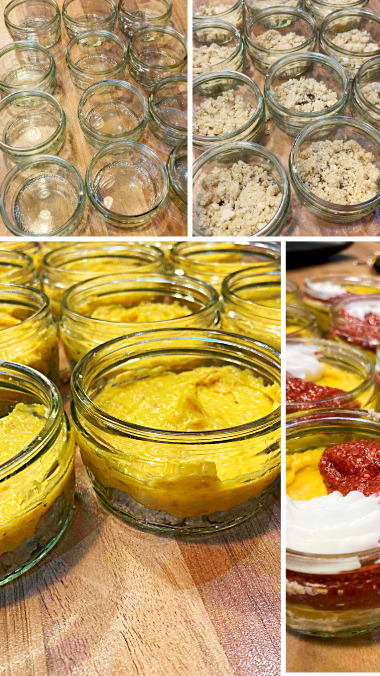
- Grind the cashew nuts until you get a rustic cashew meal. I use my NutriBullet for this, which only takes a few seconds, but any blender will do.
- Rub in the vanilla extract and maple syrup until you achieve a sticky crumble.
- Evenly distribute this between each pudding pot, pressing down roughly. A rustic base is fine, so don't worry if it's a little chaotic at this stage.
Mango Pudding Layer
- Soak your dried mango ahead of time for at least an hour, or until it's soft and blendable. You can do this overnight if easier.
- Thoroughly drain your soaked mango in a sieve.
- Melt your coconut oil and add 4 tablespoons to the mango in a blender jug.
- Add the ground flaxseed and blend until smooth.
- Evenly distribute your mango pudding layer into each pudding pot.
Raspberry Chia Seed Layer
- Blend your raspberries with the water. Add a sneaky dash of vanilla if you like.
- Mix in the chia seeds thoroughly by hand.
- Give it another couple of stirs over the first ten minutes to stop them sticking together. Then simply leave overnight or for at least an hour in the fridge. This should thicken up to perfection.
- Once set, mix again thoroughly and then evenly distribute between each pudding pot.
Finishing Touches and Serving
These ideas are optional.
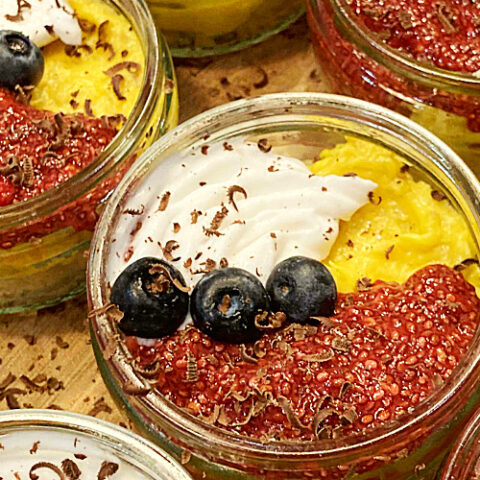
- Add a dollop of yoghurt and some fresh fruit to each pudding pot. If you want to finely grate some dark chocolate over each pot, that adds a lovely touch too.
- Chill in the freezer for fastest serve time. The mango layer will solidify perfectly in less than half an hour. Alternatively simply pop into the fridge and it'll be ready quite quickly too.
- They will keep for a month or so if you freeze them, or three days if you keep them in the fridge.
- Enjoy!
Other delicious gluten-free vegan puddings…
Pin on your vegan mango pudding on pinterest board for later…

Leave A Comment