

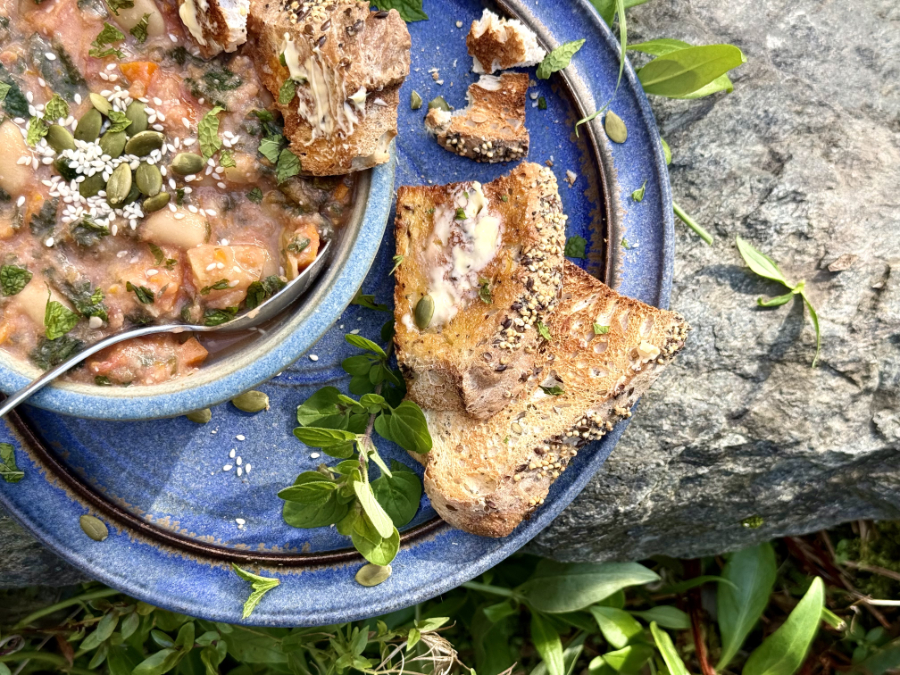
Having had quite a resourceful life, I’ll often find myself harvesting fresh nettles to put in soups, stews and curries. You see, nettles grow abundantly in the wild in temperate climates. They are one of nature’s superfoods, providing minerals such as calcium, iron, potassium and magnesium.
People often ask me what to do with nettles. So I thought I’d create a little guide here, along with one of my go-to soup recipes.
Nettles can have a slightly bitter taste, so I allow them to dance along with other flavours. I want to pack my soup with plenty of nettles, without necessarily making nettle the dominant flavour.
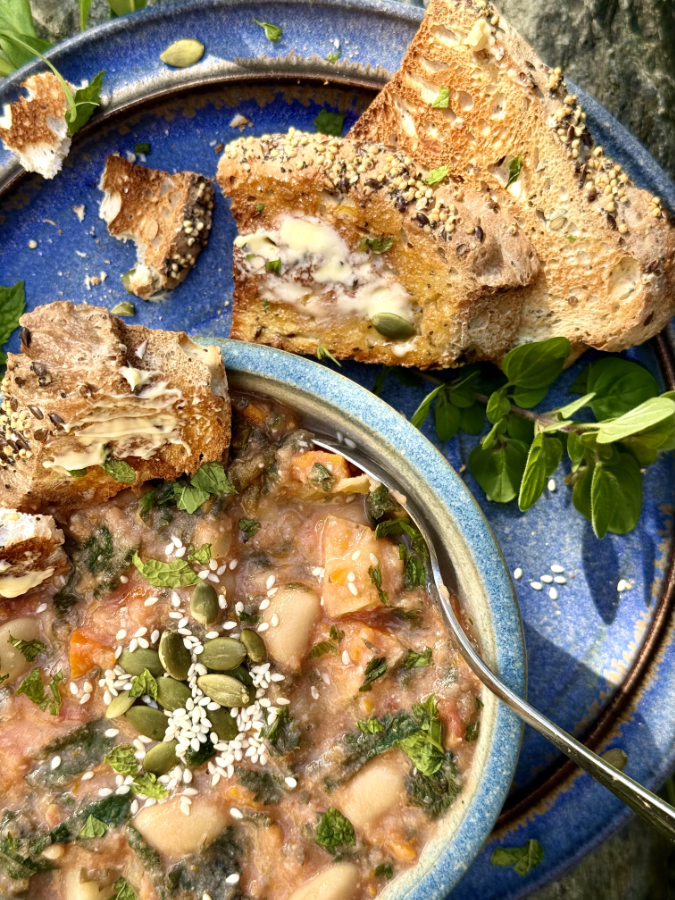
In this vegan nettle soup, I add carrots, potato, tomatoes, fresh mint and butter beans for extra protein. No stock is required as there’s plenty of flavour already. You can also add a little creamed coconut if you’d like it richer.
I’ve made a video to show you how I make it too.
Making soup with stinging nettles
What does nettle soup taste like?
Nettles have a green, earthy flavour, a little like spinach. Depending on the leaves you pick, they can have a slight bitterness.
In this soup, the carrots bring sweetness, the tomatoes add a little tang and the mint brings freshness. The butter beans make it more substantial.
Can you really eat stinging nettles?
Absolutely you can. Nettles are an incredibly resourceful green leaf, growing abundantly in the wild in many countries.
There are a few important things to know first. You need to identify them confidently, choose suitable young leaves and wear protective gloves while picking and preparing them. Once cooked, they lose their sting.
Do nettles still sting after cooking?
Cooking nettles removes their sting. Once the young leaves have simmered for a few minutes and are fully wilted and tender, they won’t sting you in the soup.
You don’t need to blanch them separately for this recipe, as they cook in the soup itself. Keep your gloves on while handling the uncooked leaves, including when washing them.
Identifying nettles and finding somewhere to pick
How do you identify stinging nettles?
If you’ve ever brushed past nettles on a walk, you’ll probably remember their sting. Thankfully, you can identify them without touching them.
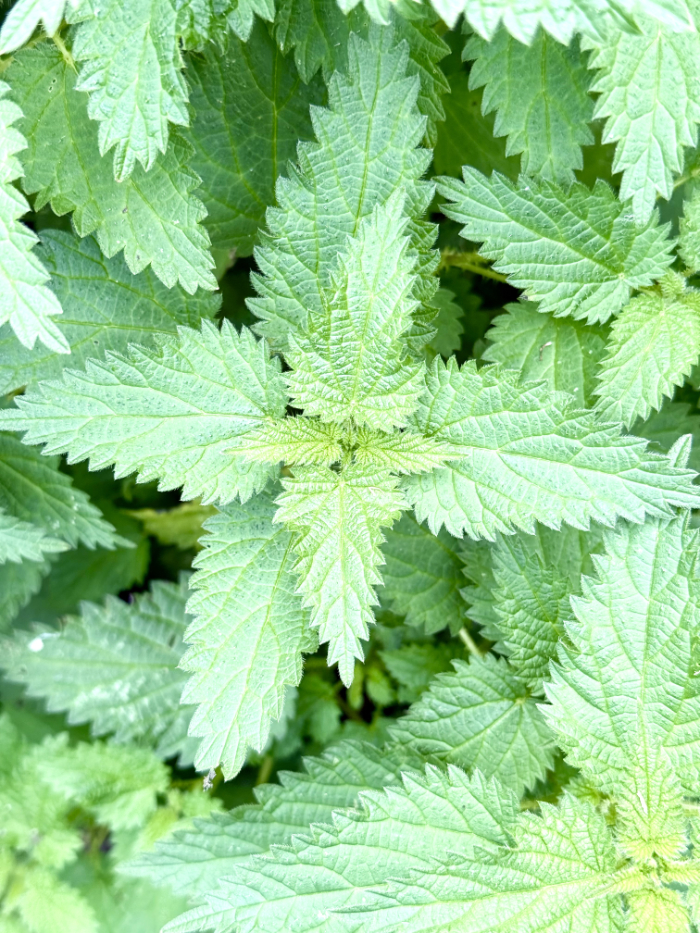
Common stinging nettles have pointed green leaves with toothed edges, often with a heart-shaped base. The leaves grow in opposite pairs along the stem. Fine stinging hairs cover the stems and the undersides of the leaves.
Use these features together, and only gather a plant when you’re completely sure what it is.
Are all types of nettle edible?
Common stinging nettles are edible when properly prepared. White and red dead-nettles are also edible, although they are different plants in the mint family.
For this guide and recipe, we’re using stinging nettles. Only pick plants you can identify confidently.
What is the difference between stinging nettles and dead-nettles?
Dead-nettles don’t have the stinging hairs of stinging nettles. They also have more obvious flowers, often white or purple, rather than the small greenish flower clusters of stinging nettles.
Their similar leaves can be confusing at first, so look at the whole plant when identifying them.
Where can you find nettles?
Nettles thrive in fertile ground. You’ll often find them at woodland edges, in hedgerows, in gardens and on ground where nature is reclaiming herself.
Choose a clean patch where you know the ground hasn’t been sprayed or contaminated.
Can you use nettles from your garden?
Nettles from your garden are ideal, provided the patch hasn’t been treated with chemicals. I’ve always intentionally left a wild patch in my garden where nettles can thrive for later harvesting.
Take only what you need and leave plenty for wildlife too.
Which places should you avoid picking nettles from?
Avoid busy roadsides, industrial sites, sprayed ground and places where dogs regularly go to the toilet. Be cautious around farmland if you don’t know which chemicals have been used.
Washing removes ordinary dirt, but it doesn’t make nettles from contaminated ground suitable to eat.
When to pick nettles and which parts to use
When is the best time to pick nettles for soup?
Spring brings an abundance of fresh, tender nettle growth. This is usually the best time to pick them for soup.
As the plants mature, their stems become woodier and the leaves coarser. If you cut a patch back during the growing season, it can produce another wave of tender leaves. That means you can also gather suitable young regrowth in summer or autumn.
Can you eat nettles after they have flowered or gone to seed?
For soup, it’s best to choose young growth that hasn’t flowered or gone to seed. Mature flowering plants are tougher and less pleasant to eat, and foraging guidance advises avoiding their leaves.
Fresh young regrowth from a patch that has been cut back is different from the old flowering stems.
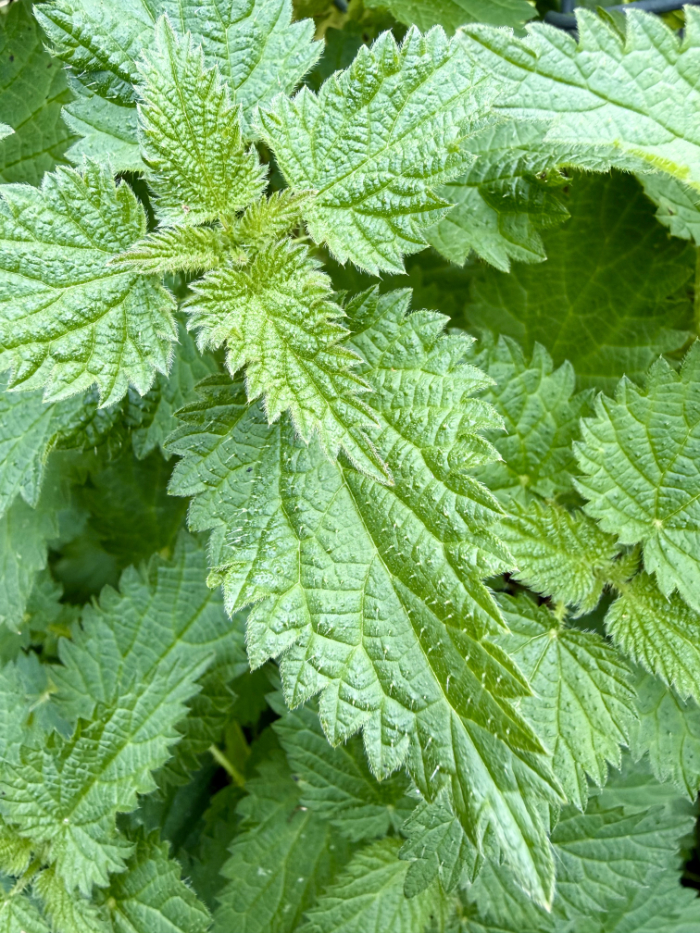
These nettles here are from fresh regrowth in the autumn after being cut back in the summer…
Which parts of nettles do you pick: leaves, tops or shoots?
Choose the fresh, tender tops and young leaves. You can snip off the top few pairs of leaves rather than taking the whole plant.
For this recipe, remove the coarse stems and weigh out the leaves. Tough stalks can leave stringy fibres in your soup, even after blending.
Handling, washing and preparing nettles
How do you pick and prepare nettles without getting stung?
I use rubber washing-up gloves to pick my nettles. Thick gardening gloves can work too, as long as the stinging hairs can’t get through them.
Scissors make it easy to snip off the tops. Keep your gloves on when removing stems and washing the leaves, as picked nettles can still sting.
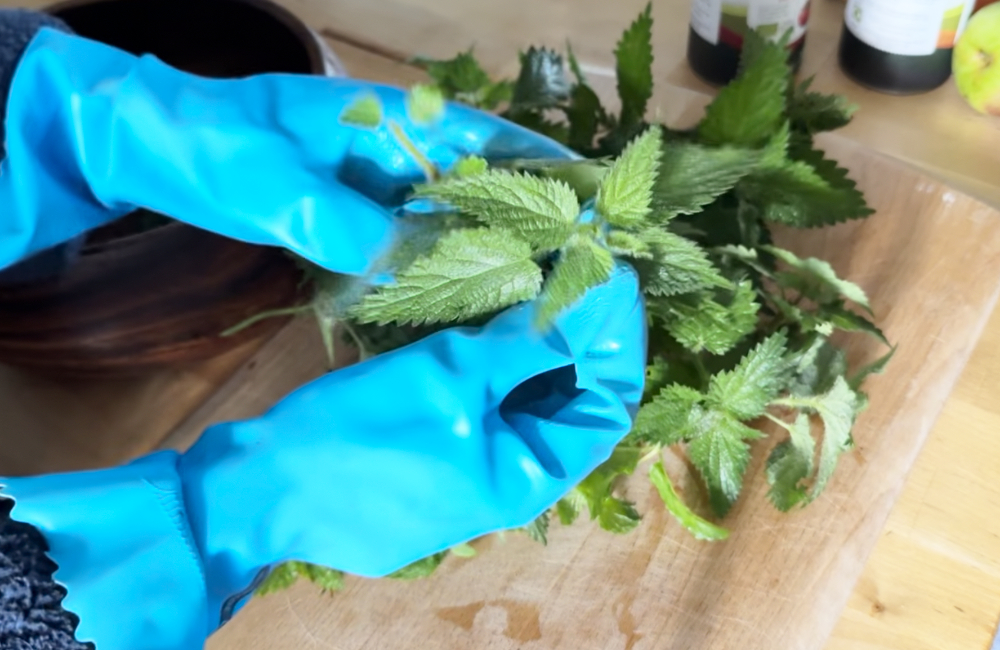
How do you wash nettles?
With your gloves on, swish the leaves around in a large bowl of cold water to loosen any grit, debris or insects. Lift them out, leaving the grit behind, then repeat with fresh water if needed.
Give them a final rinse in a colander and let them drain before cooking.
Cooking nettle soup and getting the flavour right
How much nettle do you need for a delicious soup?
For this recipe, I use 100g of fresh young nettle leaves, weighed after removing the coarse stems. You can add much more or half the amount, depending on how much you want, or how much you have available.
That can look like quite a lot in the colander, but remember nettles reduce considerably as they cook, just like spinach and chard.
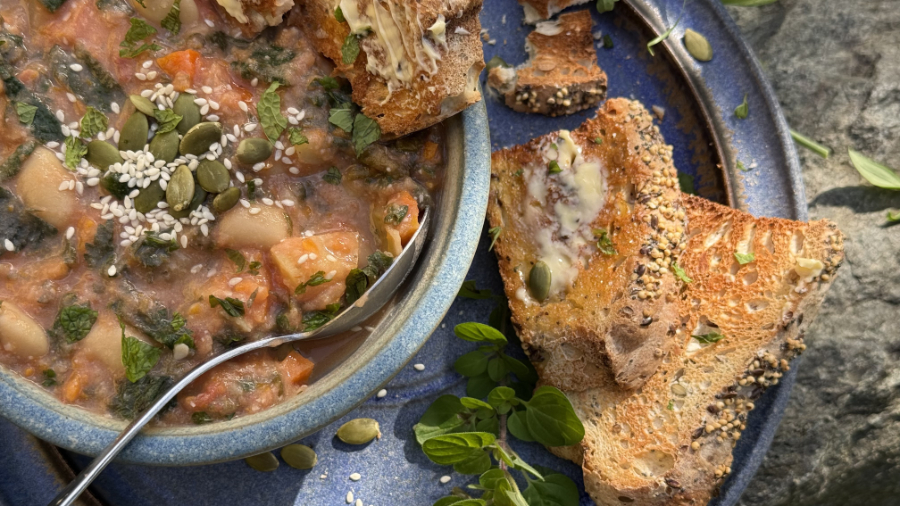
Which vegetables work particularly well with nettles?
My favourites are garden peas, carrots, beetroot, potatoes, leeks and garlic. They all bring something different to the flavour.
For this soup, the carrots add sweetness, the potato gives it body and the tomatoes bring a little tang. The butter beans add extra protein and make it more filling.
When should you add the nettles, and how long should they cook?
I add my nettles near the end, once the carrots and potato are tender. Young leaves only need a few minutes of simmering until fully wilted and cooked.
This helps retain their fresh flavour and avoids cooking the leaves for longer than they need. The colour of the finished soup will also reflect the carrots and tomatoes.
Why add mint to nettle soup?
Mint lends itself especially well to nettle soup. Its freshness helps balance the earthy flavour and any bitterness, and it dances so wonderfully with the other ingredients.
I use fresh mint leaves, removing any coarse stalks before adding them.
Troubleshooting nettle soup
Why has my nettle soup turned brown or grey?
Long cooking can dull the green colour of nettle leaves. Adding them near the end helps preserve more of that freshness.
However, this recipe also contains carrots and tomatoes, so it won’t necessarily have the bright green colour of a soup made mainly from nettles. A change in colour doesn’t automatically mean you’ve done anything wrong.
Why is the soup stringy, fibrous or gritty?
Stringy fibres usually mean that tough stalks or older leaves have gone into the pan. Choose young leaves and remove coarse stems before cooking.
Grittiness often comes from soil that wasn’t fully washed away. Swishing the leaves in water and lifting them out, rather than pouring the gritty water back over them, helps avoid this.
Nutrition and health benefits of nettles
Is nettle soup good for you?
Yes. Nettles contribute minerals, vitamins and fibre, and this soup also brings together vegetables and butter beans for extra nourishment and protein. It’s a delicious way to make use of an abundant wild food.
What nutrients do nettles provide?
Nettles provide a range of useful nutrients, including:
- Calcium, which helps maintain bones and teeth.
- Iron, which helps the body make red blood cells that carry oxygen.
- Magnesium, which supports normal muscle and nerve function.
- Potassium, which helps nerves and muscles work properly.
- Beta-carotene, which the body can turn into vitamin A for vision and immune function.
- Vitamin K, which supports normal blood clotting.
The amounts vary with the growing conditions, age of the leaves and how they’re prepared.
What about nettles for hay fever and arthritis?
Nettles contain flavonoids such as quercetin and have a long history of use in herbal medicine.
Small human studies have explored freeze-dried nettles for hay fever and cooked nettles alongside medication for arthritis. That’s interesting research, although it doesn’t establish nettle soup as a treatment for either condition.
Is there a difference between eating nettles and drinking nettle tea?
Nettle tea is made by steeping fresh or dried leaves in hot water. Some minerals and plant compounds pass into the water, giving you a lovely herbal drink.
When you eat the leaves in soup, you also get their fibre and protein, along with nutrients that don’t transfer readily into tea. Cooking reduces some vitamins, but the leaves still make a nutritious addition to your meal.
Storing and freezing nettle soup
How long does nettle soup keep in the fridge?
Cool the soup promptly and put it in the fridge within two hours of cooking. Eat it within 48 hours, or freeze portions for another day.
Reheat only the portion you need, until steaming hot throughout.
Can you freeze nettle soup?
Yes. Freeze the cooled soup in portions, leaving a little space in the containers for it to expand.
Defrost in the fridge, use within 24 hours of fully defrosting and reheat until steaming hot throughout.
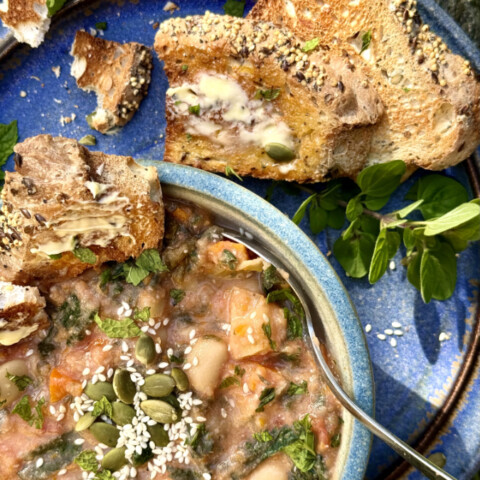
Nettle Soup with Mint, Vegetables and Butter Beans
A delicious nettle and mint soup with carrots, apples and butter beans. Vegan as always, with plenty of flavour and no stock needed.
Ingredients
- 100g fresh young nettle leaves, weighed after removing coarse stems
- 30g fresh mint leaves stalks removed
- 500g carrots
- 1 medium potato
- 500ml water
- 2 medium-sized apples
- 1 tin butter beans (approximately 250g drained weight)
- 1 (400g) tin chopped tomatoes (or 400ml passata)
- 1 heaped teaspoon sea salt
- 50g creamed coconut, optional
Instructions
- Pick your nettle leaves using protective gloves. Choose fresh, young leaves, avoiding older, coarse leaves and plants that have flowered or gone to seed.
- Remove the stalks from your nettles, wash the leaves well to remove any grit and roughly chop them. Keep your gloves on for this part, as nettles still sting until cooked.
- Chop your carrots and potato into very small cubes. The smaller you chop them, the faster they will cook. Put them in a pan with the 500ml water, cover with a lid and bring to the boil. Once it comes to the boil, reduce to a simmer.
- In the meantime, chop your apples into small pieces, discarding the cores. Then add them to the pan.
- The carrots and potato should be tender after about 10 minutes of simmering if you've chopped them very small. They are ready once you can pierce them easily with a fork.
- Add the tomatoes, drained butter beans and sea salt, then bring the soup back to the boil.
- Finally, add your nettles and mint, along with the creamed coconut if you're using it.
- Mix everything in thoroughly. Simmer for another few minutes, until the nettles are fully wilted and tender. Pulse through a few times with a hand blender and then it's ready.
Notes
Other recipes that you’ll love
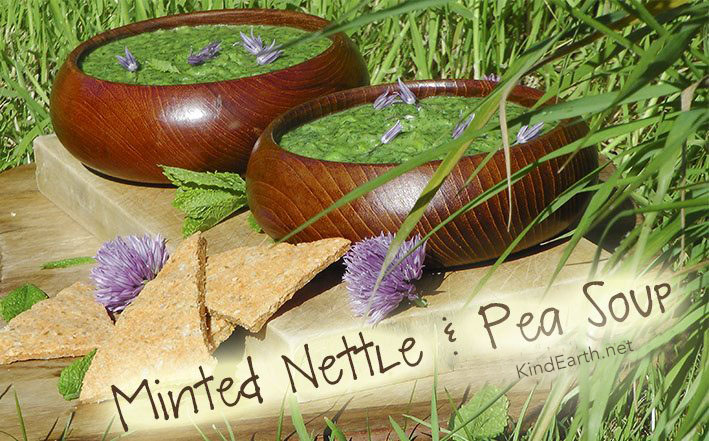
My delicious vegan soup collection (all without stock)


Leave A Comment