

Roast butternut squash and chickpea curry in a creamy cashew sauce is one of those curries that everyone loves. It’s something that I’ve been making for my guests on retreat for many years. An excellent crowd pleaser, made with delicious plant-based ingredients. Cashew cream is a great alternative to coconut milk and takes it to a whole new level of creamy deliciousness and flavour.
Today I am sharing the exact roast squash curry that I’ve been making on retreats recently. It’s ideal for groups of friends and family. A perfect option for gatherings of people who want to share hearty, feel-good food.
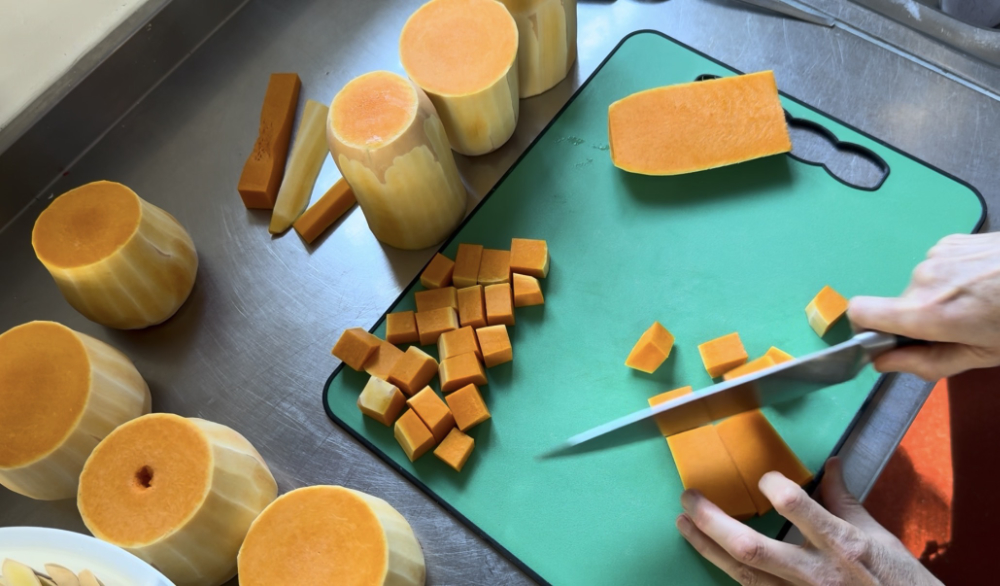
I’ve also recorded a video on retreat to show you how I make it, including how to peel and cube your squash.
How many people does this squash and chickpea curry serve?
This recipe is for a group of 12 to 18 people, either on its own or as part of a medley of other things.
- If it’s served on its own with rice, there is enough for 12 people.
- If it’s served along with a medley of other things, such as dal, and baked pakora it will serve up to 18 people.
The squash measurements are approximate. I am always edging towards extra food because I never want to underfeed my guests, knowing that I can put any extra into portioned containers and refrigerate or freeze for later.
You can halve, or even quarter the recipe if you don’t have space to make the full amount.
Do I need to roast my squash for curry?
It’s much better if you do. Roasting squash deepens the flavour, bringing out its sweetness and giving it those delicious golden edges. It creates a deeply tasty, earthy yet sweet deliciousness.
Spread your cubes out on the trays, leaving a little space for air between them. This allows for more even roasting.
If you can’t roast your squash, you could cube it and simply boil it until tender instead. Drain before adding it to the curry. It will still be tasty, but bear in mind that you won’t get the same roasted flavour.

How do I blend the cashews for the curry sauce?
Any blender will work. There is no need to soak the cashews as they are soft enough to blend already. A bullet blender works especially well for this.
Blend the cashews with the curry powder, salt, optional fresh ginger and about 400ml of the measured water. You may need to blend for a little longer in a regular, less powerful blender. Check that it’s smooth before pouring it into your pan. If in doubt just blend for longer.
Homemade cashew sauce as a thickener
The cashew sauce is a thickening agent. This means it thickens and becomes creamy as it heats, so keep stirring, especially across the bottom of the pan. You’ll be adding the extra water at this stage. If you don’t stir it will thicken at bottom of pan and probably go more clumpy than you’d like. If it becomes thicker than you’d like, simply add a little more water.
Which curry powder do I use?
I am using Jamaican curry powder. I often change my curry powder from year to year and sometimes make my own from scratch. Any curry powder works, so I suggest you use your favourite. Add extra to your preferred taste too.
What squash can I substitute for butternut squash?
Yes, you can use other winter squashes in place of butternut, for example:
- Acorn squash
- Crown Prince squash
- Kabocha
Peel and deseed as needed, then cut into fairly even cubes. The roasting time may vary, so check that your squash is tender but not mushy (meaning you can ‘just’ pierce it with a fork) before adding it to the curry.
What can I use if I don’t have chickpeas?
If you don’t have chickpeas, you can do a straight swap for cooked black beans, butter beans or cannellini beans. Use approximately the same drained weight. If you want more, simply add more. This roast quash curry is quite adaptable.
If you don’t like chickpeas or beans, just leave them out. It’ll reduce the quantity, but the curry will still be delicious, and no adjustments needed.
Is this totally vegan and gluten-free?
Yes. Just check that your curry powder is gluten-free if you are making this for someone who needs to avoid gluten.
The creamy sauce is made with cashew nuts, so this recipe isn’t suitable for anyone with a cashew or nut allergy.
This recipe features in my complete guide to vegan dinners collection, which I recommend if you are looking for more gluten-free, totally plant-based ideas. Most of them are adaptable to suit your needs too.
Can I freeze leftover squash and chickpea curry?
Yes, absolutely you can, and I often do this. Simply freeze into the sized portions that you’d reuse later. For the best flavour use within three months.
Divide the extra curry into smaller containers so it cools quickly, then cover and refrigerate or freeze within one to two hours of cooking if possible.
Simply defrost in the fridge and reheat thoroughly until steaming hot all the way through. Use within 24 hours of fully defrosting. Add a splash of water if the sauce needs loosening.
What serves well with this roast butternut squash curry?
I’d serve a medley of delicious things for curry night with the following…
Homemade oatcake wraps (a great chapatti alternative)
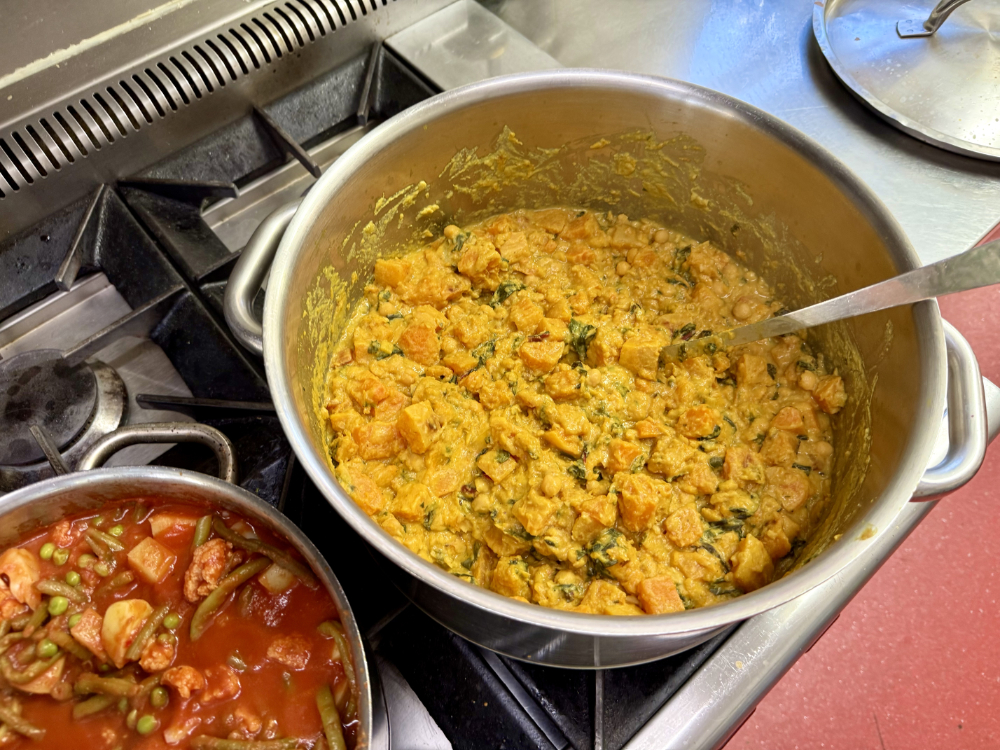
Easy roast squash and chickpea curry for a group
plant-based crowd pleaser that I've been making for my guests on retreat for years. Perfect for sharing with friends and family, with cashew cream as a great alternative to coconut milk.
Ingredients
- 4kg (approximately) butternut squash (whole, unpeeled)
- 3 x 400g tins of chickpeas, drained (approximately 720g drained weight)
- 1.2 litres water
- 150g cashew nuts
- 2 tablespoons Jamaican curry powder (or your favourite curry powder), plus extra to taste
- 2 teaspoons sea salt
- A thumb-sized piece of fresh ginger (optional)
- 2 tablespoons olive oil (or any cooking oil)
- Extra sea salt and black pepper
- 100g baby spinach or Swiss chard
Instructions
- Please watch my video for a helpful visual guide on how to make this, especially how to peel and cube your squash. I recorded this on retreat whilst making it for my guests.
- Preheat your oven to 200°C fan or 220°C conventional (425°F).
- Peel, deseed and then cube your squash into fairly even cubes. I like to go for around 1.5cm across. Keep them as even as possible.
- Spread all of your cubes onto oven trays. Sprinkle on sea salt and black pepper, along with the oil. Toss your diced squash until it's all evenly coated with the salt, pepper and oil.
- Once coated, spread evenly on your oven trays, making sure there is a little space for air between each cube. This allows for more even roasting.
- Pop your trays into the hot oven. Allow the cubes to roast until they have some golden edges and you can easily pierce them with a fork. This will usually take between 20 and 40 minutes, depending on your oven and how big you've cut your cubes.
- In the meantime, make your cashew sauce by blending the cashews with the curry powder, 2 teaspoons of sea salt and fresh ginger if you are using it. Use about 400ml of your measured water to blend this.
- There is no need to soak the cashews first. A bullet blender works especially well. It will usually take about a minute, although you may need to blend for longer in a regular, less powerful blender. Check that the cashews are smoothly blended.
- Chop your spinach or chard and toss into a large pan. If using chard stalks, chop them finely, removing any tough parts.
- Drain your chickpeas and toss into the pan.
- Pour in your cashew blend and the remaining 800ml of water. Use some of this water to rinse any remaining cashew sauce out of your blender jug.
- Turn on the heat, stirring as it comes to a gentle boil. The sauce should quickly thicken. Reduce the heat to a simmer and cook for about 10 minutes, stirring regularly across the bottom of the pan. If using chard stalks, check that they are tender.
- Have a taste and add extra curry powder if you'd like more. Stir it in and allow it to cook in the sauce for a few minutes.
- Once your squash cubes have roasted, add them to the pan.
- Stir gently until everything is evenly coated. If some of the squash pieces aren't quite cooked, be sure to cook for a little longer. Otherwise, heat for about 5 minutes, until everything is piping hot.
- If the sauce is thicker than you'd like, simply stir in a little more water. Have a final taste, adjust the seasoning if needed, and it is ready to serve.
Notes
See article above for swaps and extra tips.
Other recipes that go beautifully with this roast squash curry
How to make perfect yellow rice with turmeric and brown rice


Vegan curry night recipe collection


Leave A Comment