

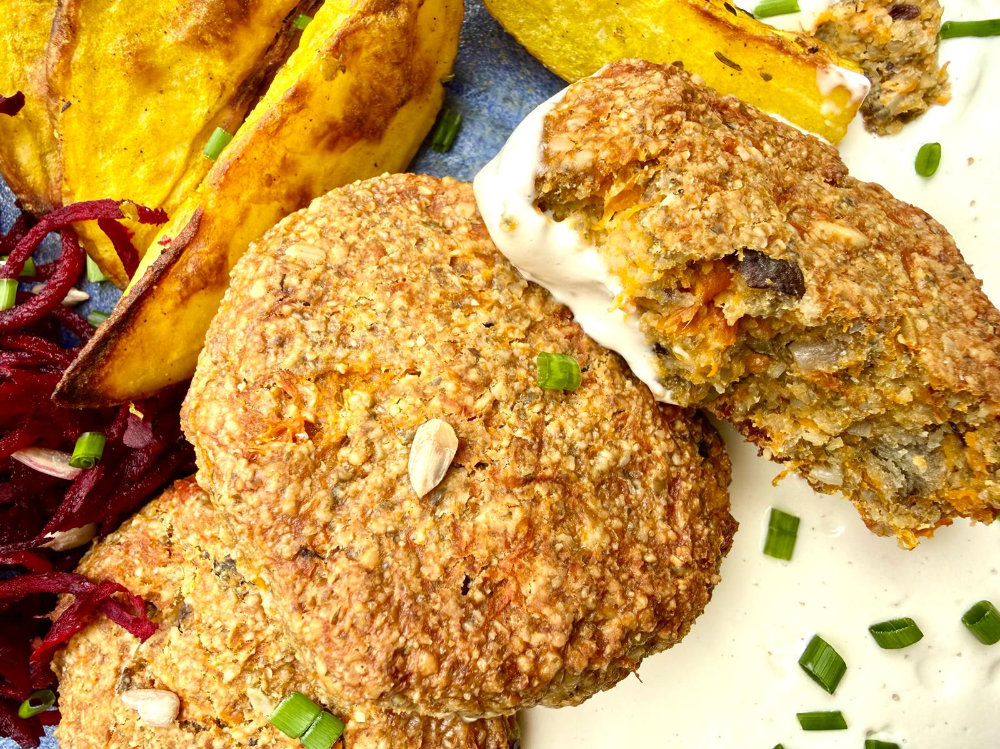
I adore dulse. It’s a beautiful seaweed with a naturally salty, savoury flavour that adds a gorgeous depth to these burgers. It’s also naturally rich in iodine and contains a lovely range of trace minerals. You only need a little here, but it gives the burgers a subtle seaweed twist and an extra layer of umami.
So if you’ve got a packet of dulse flakes and are wondering what to do with them, this dulse flakes recipe is a delicious place to start.
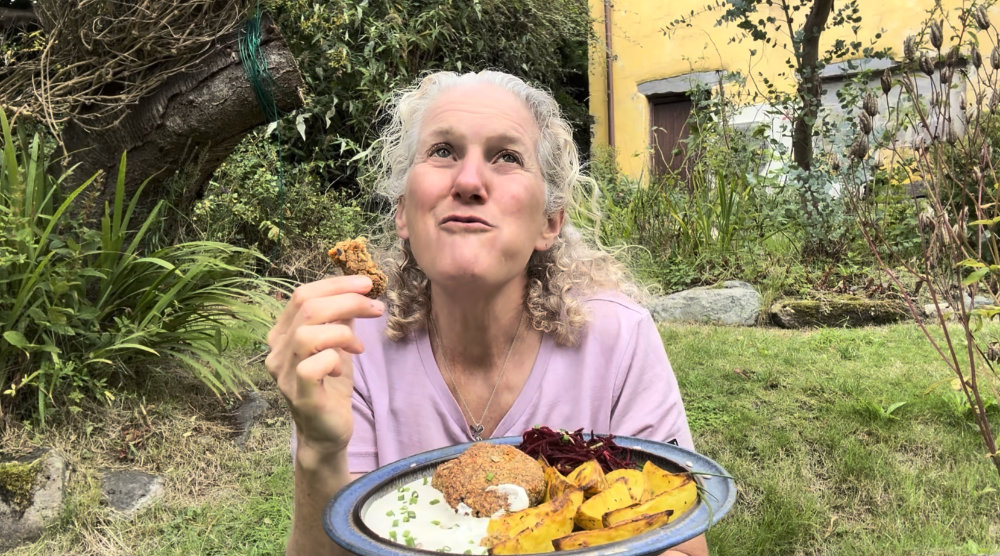
Ana eating dulse flake burgers
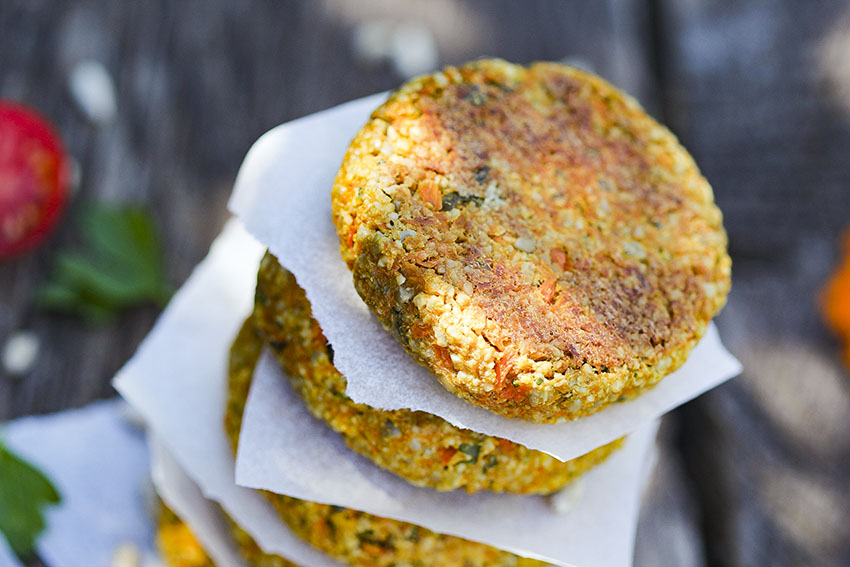
Dulse sometimes features in my cuisine. Recently I decided to infuse it into my vegan burgers, and I was absolutely delighted with the results. Today I’m sharing these butternut squash and dulse burgers with you. They’re made with pumpkin seeds, sunflower seeds and a little Atlantic dulse for a delicious savoury depth.
Watch how I make these vegan butternut dulse burgers here
What are dulse flakes and where to get them from?
Dulse is very much a North Atlantic seaweed. It’s even found on British and Irish shores… although my confidence in foraging it isn’t up to scratch, so I do tend to find a certified organic dulse. I usually buy it in the form of flakes these days. It adds a delightful depth to my butternut squash and seed burgers.
I get my seaweed from The Cornish Seaweed Company (this is not sponsored, I just love their seaweed and am really happy with it).
They say their dulse is wild harvested by hand from the Cornish coast, specifically the Lizard Peninsula, and their seaweeds are certified organic by the Soil Association. They also say the seaweed is lab tested and safe for human consumption, which I personally find very reassuring.
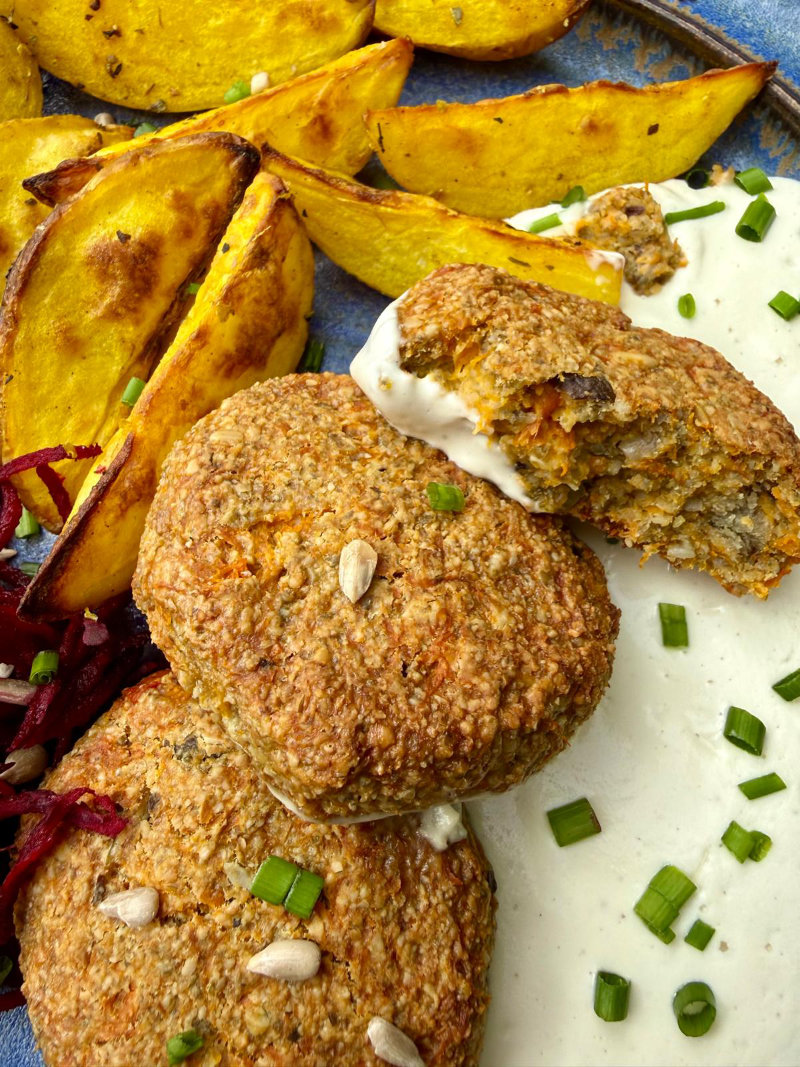
About dulse flakes and how to use them
What is dulse?
Dulse is a beautiful deep red seaweed that grows naturally around the rocky shores of the North Atlantic, including here in Britain and Ireland. Its botanical name is Palmaria palmata. It has been eaten as a food for centuries and these days you can easily buy it dried, either whole or as little flakes.
What does dulse taste like?
Dulse has a naturally salty, savoury and slightly smoky flavour, with lots of lovely umami going on. It reminds me more of a seasoning than something that tastes overwhelmingly of the sea. In these burgers I only use a small amount, so you aren’t going to bite into them and think “SEAWEED!” It simply adds another layer of delicious savoury flavour.
Why add dulse flakes to this vegan burger recipe?
I adore dulse anyway, so finding ways to weave it into everyday food makes me very happy. Butternut squash has a lovely natural sweetness, and the salty, savoury flavour of dulse balances that beautifully. Together with the seeds and spices it gives these burgers a little extra depth and makes them quite different from your average veggie burger.
So if you want a simple dulse flakes recipe, this one really hits the spot.
Are dulse burgers fishy?
No. Dulse does have a gentle taste of the ocean, as you would expect from a sea vegetable, but I wouldn’t describe these burgers as fishy. The dulse is there as part of the overall flavour rather than dominating everything. If you enjoy savoury, earthy, umami flavours, I think you will love what it brings.
Is dulse good for you?
Dulse is naturally rich in minerals, most notably iodine, and can also provide nutrients including iron, protein and fibre. The exact amounts vary considerably depending on where the seaweed grows and how it is harvested, so I prefer to think of it simply as a wonderfully mineral-rich wholefood from the sea rather than making wild claims about it.
Does dulse contain iodine?
Yes. Seaweeds such as dulse are naturally rich in iodine, which the body needs for normal thyroid function. The iodine content of seaweed can vary enormously though, so more definitely isn’t always better. In this recipe we’re using dulse as a flavourful ingredient rather than eating huge quantities of it.
What are dulse flakes?
Dulse flakes are simply dried dulse seaweed that has been broken into small pieces. They are probably my favourite way to use it because you can just sprinkle them straight into savoury recipes. They work beautifully in burgers like these, as well as soups, stews, dressings and all sorts of other dishes where you want a little savoury depth.
Where does Atlantic dulse come from?
Dulse grows naturally in the cool waters of the North Atlantic. You find it around Britain and Ireland as well as further north and on the other side of the Atlantic. I especially love the idea that this isn’t some exotic ingredient that has travelled halfway around the planet. Dulse is quite literally a wild Atlantic vegetable.
Where can I buy dulse flakes in the UK?
You can find dulse in good wholefood shops and online. I particularly love the idea of using British dulse. The Cornish Seaweed Company, for example, sells organic dulse flakes that are hand harvested from the Cornish coast. Their harvesting areas are monitored and they also independently test their seaweed for things including heavy metals, pollutants and microbial contaminants.
How can seaweed from the ocean be organic?
I wondered about this myself. Organic certification for wild seaweed isn’t claiming that the entire ocean is somehow “organic”. It covers things such as where the seaweed is harvested, how it is harvested and processed, environmental sustainability and water and product safety.
For example, the Cornish Seaweed Company says its seaweed is Soil Association certified organic and harvested from carefully selected Cornish waters. Those harvesting areas are monitored, and the seaweed itself is independently tested for contaminants.
So an organic dulse label essentially tells you:
- it comes from an approved/monitored harvesting area
- the harvesting method meets organic environmental standards
- the beds are managed sustainably
- the processor/harvester is inspected and certified
Can I leave the dulse out of these burgers?
You can. The burgers will still work without it. The Atlantic dulse is one of the ingredients that makes these burgers special. It adds that subtle salty, savoury depth and works especially well against the sweetness of the roasted butternut squash. If you don’t have access to dulse flakes then try my alternative version for the Kind earth Seed Burgers.
Alternatively, if you do decide to leave the dulse out, then try some fresh chopped parsley leaves (or dry) and a little crushed garlic, or chopped fresh herbs instead.
What can I use instead of dulse?
If you can’t find dulse, another mild edible seaweed such as nori flakes would probably be my first choice. Nori also has a naturally savoury umami flavour, although it doesn’t taste exactly the same.
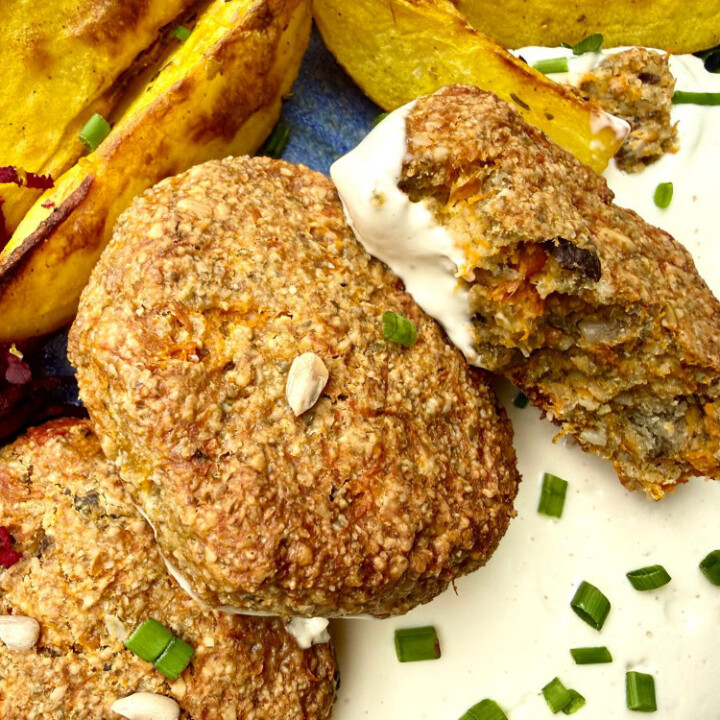
Butternut Squash & Atlantic Dulse Burgers
Vegan butternut squash burgers made with pumpkin seeds, sunflower seeds and Atlantic dulse seaweed. Naturally gluten-free, nourishing and full of delicious savoury flavour.
Ingredients
- 900g butternut squash (raw, unpeeled weight)
- 200g pumpkin seeds
- 200g sunflower seeds
- 2 tablespoons organic dulse flakes
- 1 heaped teaspoon sea salt
- A big twist of black pepper
Instructions
- Please see my quick video below for a helpful visual guide.
- Roast your squash by slicing it in half, scooping out the seeds and placing it in the oven. This will take about 45 minutes in an oven set to 200C (400F). Slice into smaller pieces if you want it to cook faster. The weight and volume of your squash will reduce significantly after baking.
- Once you can easily pierce your squash with a fork, take it out of the oven and leave it to cool down. It is much easier to handle when cool.
- When your baked squash is cool, scrape the soft squash away from the skin and put it into a mixing bowl. Mash together with the dulse, sea salt and black pepper.
- Grind the seeds in a blender. I use a bullet blender, but a food processor, nut mill or regular blender will do the job too. A rustic consistency is absolutely fine.
- Mix the ground seeds into the mashed squash thoroughly, until everything is evenly combined.
- Shape into patties.
- To cook, you can place them in an air fryer for around 12 to 15 minutes.
- Alternatively, place them under a grill (called broil in the USA) for around 8 minutes on each side.
- Or you can place them on baking paper on an oven tray and cook for up to 25 minutes, or until gently tanned on top.
- If you are not ready to cook them straight away, place them in a sealed container in the fridge. Use baking paper to separate any layers.
- You can also freeze these. Simply take them out and defrost before cooking, or cook from frozen and add a little extra cooking time.
- Enjoy, and let me know if you make these.
Another delicious seed burger recipe without the dulse flakes
My Kind Earth seed burger recipe
Lots more delicious gluten-free vegan dinner recipes…
Gluten-free vegan dinner collection


Leave A Comment